AI
Why agentic AI is the new “best buddy” for retail customer experience teams
Planners do not want AI to simply generate a static delivery plan and walk away. They want a system that can respond as conditions change throughout the day, the way customer expectations and delivery windows actually unfold.
October 8, 2026 by George Ninikas — Senior Vice President of Sales and Accounts, Supply Chain Planning, Americas, ORTEC
 ChatGPT
 Grok
Grok Perplexity
 Claude
Retail customer experience leaders are not short on enthusiasm for artificial intelligence, but they are short on certainty about how to use it, especially when it touches the delivery promises customers depend on. A recent poll of supply chain and logistics professionals found that only 29% are currently deploying AI to support real, operational decisions. The largest group, 37%, describe themselves as actively exploring how AI might help, testing pilots and trying to separate genuine capability from marketing language.
That gap matters for any retailer whose customer experience hinges on getting the right order to the right doorstep, on time. It suggests the industry has moved well past asking whether AI belongs in retail delivery operations and is now wrestling with a harder question: what role should it actually play once it arrives. The poll also pointed to where practitioners expect the most value to materialize. Thirty-four percent identified dynamic routing and real time replanning as the application most likely to deliver meaningful impact in the near term, ahead of other commonly discussed use cases. Planners do not want AI to simply generate a static delivery plan and walk away. They want a system that can respond as conditions change throughout the day, the way customer expectations and delivery windows actually unfold.
Moving past the replacement narrative
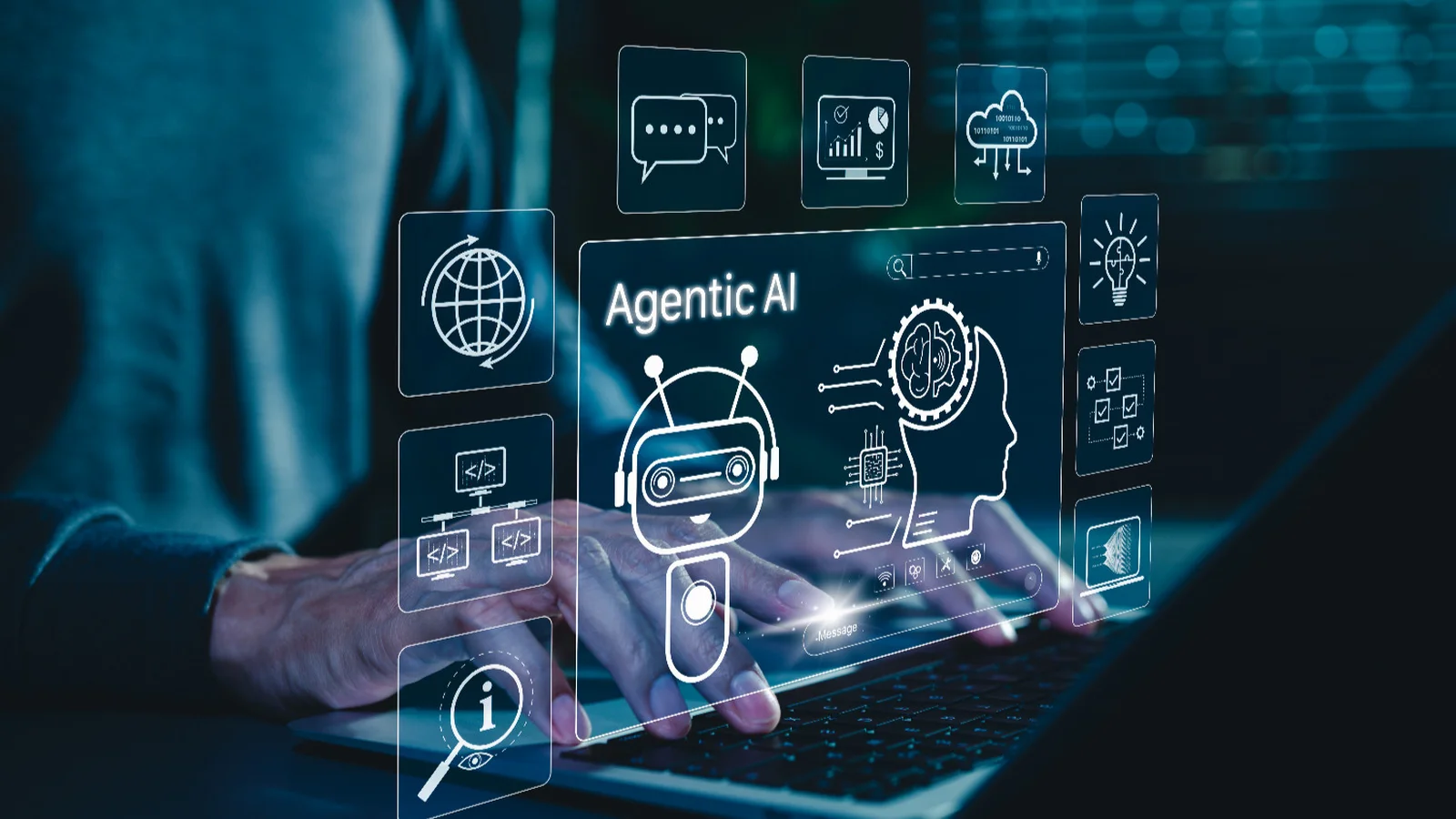
Much of the public conversation about AI in retail logistics still centers on automation replacing human judgment, and the algorithm quietly taking over the dispatcher's desk. That framing, while attention grabbing, does not match what is happening inside most retail delivery organizations, where the human touch still shapes the customer experience. A more accurate view is also more practical. Agentic AI, meaning AI systems capable of taking multi step actions on a planner's behalf rather than simply producing a single output, is increasingly being designed as a support system. It sits alongside the human decision maker, not in place of them.
This distinction is not trivial. A planner managing a regional delivery network is not solving one isolated problem. They are juggling vehicle capacity, driver availability, customer time windows, fluctuating demand, weather, traffic, and last-minute disruptions, often simultaneously, all while a missed window can mean a disappointed customer. In one recent example, a retail team was using 14 planners for six hours a day to engineer delivery territories, assigning dedicated zones of delivery by driver and day of the week. Decades of work have gone into giving planners powerful optimization engines to handle that complexity mathematically. What has been missing is an easier way to interact with those engines without needing a data science background to operate them.
Solving the parameter plague
Anyone who has worked inside an advanced planning system knows the feeling of staring at a dense configuration screen, full of buttons and fields that control behavior in ways that are not always obvious. This condition might be called the parameter plague, and it is one of the quieter barriers to AI adoption in retail delivery operations. Powerful optimization logic is only useful if the people who need it can actually access it, and every delay in accessing it can show up as a customer-facing delivery miss.
Agentic AI offers a practical answer to this problem. Rather than requiring a planner to manually adjust dozens of settings to test a scenario, a natural language interface lets that same planner simply describe what they want to explore. Asking a system to show what happens if a driver calls in sick, or to compare two delivery sequences, or to flag which routes are most exposed to today's weather and therefore most likely to miss a delivery window, becomes a conversation rather than a technical exercise. The underlying optimization math has not changed. What has changed is who can reach it, and how quickly.
This is also where the idea of AI as a digital co-worker becomes useful. A good colleague does not take over someone's job. A good colleague handles the repetitive, time-consuming groundwork, surfaces relevant information at the right moment, and offers a recommendation while still leaving the final call to the person with context and accountability. Applied to retail delivery planning, that means an agentic system can monitor a network continuously, flag a disruption the moment it happens, propose a reassignment, and explain its reasoning, while the planner retains the authority to accept, adjust, or override the suggestion before it ever reaches the customer.
From plan creation to plan analysis
This shift is changing what the planning role actually looks like day to day. Historically, planners spent much of their time building schedules and routes from scratch, often under significant time pressure to protect the delivery promise made to customers. As agentic systems take on more of that initial construction work, the planner's role is shifting toward analysis and judgment: reviewing automated proposals, adjusting for context the system may not fully capture, and deciding how much autonomy to grant for routine, low-risk decisions versus how much to reserve for direct human approval.
That balance of autonomy is not fixed. Organizations are increasingly able to dial it up or down based on comfort level and track record. A single recurring task, such as reassigning a route when a driver is unavailable, might begin as a fully human reviewed decision and gradually become automated once the system has demonstrated consistent, reliable judgment in that specific scenario.
What this means for retail customer experience leaders
The poll data points to an industry in transition rather than an industry that has arrived. With the largest segment of practitioners still in an exploratory phase, and the clearest near-term demand centered on dynamic, real-time decision support rather than full automation, the opportunity for retail customer experience leaders is to treat agentic AI as an extension of their planning teams, and not as a replacement for them.
The technology's value lies less in removing people from the loop and more in giving them faster access to better information, fewer manual steps, and more time protecting the moments that shape how customers feel about a brand. That is a more grounded story than either utopian automation or job displacement, and it is increasingly the one playing out in practice.
About George Ninikas

Georgios Ninikas is the SVP of Sales and Accounts for the Americas at ORTEC, leading growth initiatives, strengthening client relationships, and driving sales excellence across North and South America. Since joining ORTEC in 2010, George has advanced through a series of increasingly senior roles thanks to his ability to translate complex technologies into client-focused strategies that deliver measurable value.
Related Media
Subscribe
Get the latest news and resources from Retail Customer Experience.