Marketing
Attention is the new currency: Why traditional museums are losing audiences and how immersive experiences can save them
Today, cultural spaces are forced to compete not merely with one another, but with the endless, rapid-fire stream of short-form digital content.
July 6, 2026 by Anton Tertyshnyk — Creative Director, Lumotion Studio
 ChatGPT
 Grok
Grok Perplexity
 Claude
Over the past decade, a clear and somewhat uncomfortable reality has emerged in the cultural sector: attention has become the new, most valuable currency. Classic museums, designed for a different era, were built for visitors who had the time and patience to read at length, observe silently, and spend hours in exhibition halls without constant external stimuli.
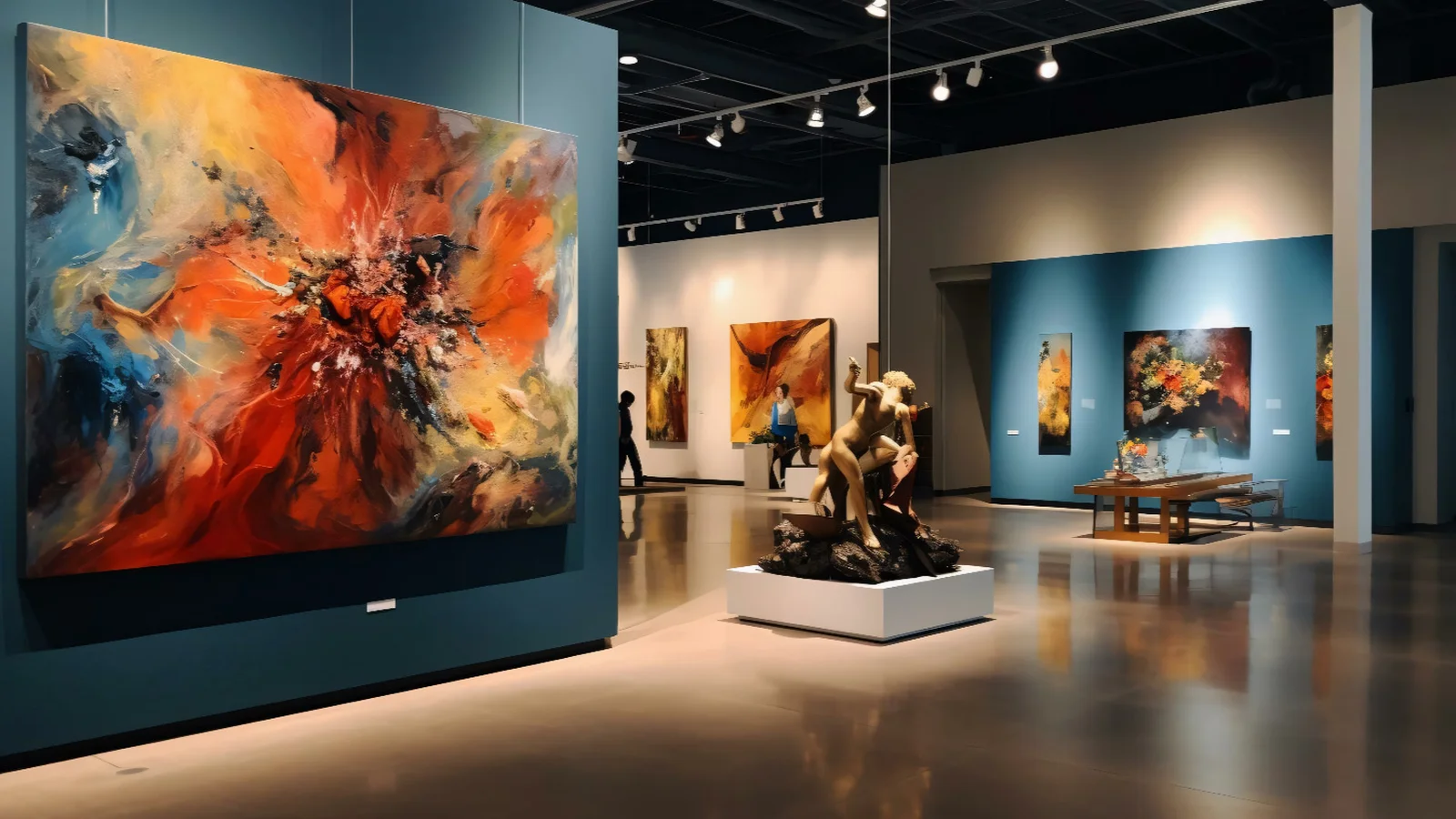
Today, cultural spaces are forced to compete not merely with one another, but with the endless, rapid-fire stream of short-form digital content. In this battle for attention, static exhibitions are struggling. Modern visitors increasingly reject passive observation behind glass in favor of interaction, exploration, and a sense of direct involvement.
Immersiveness: An engagement tool, not a "wow effect"
Often, immersive technologies, such as digital signage, projection mapping, and interactive displays, are dismissed as superficial wrappers or fleeting technological attractions.However, this is a limiting perspective. In reality, interactivity is a powerful mechanism for sustaining attention and driving deep engagement.
When visitors are empowered to touch, move, or directly influence their environment, dwell times at exhibits naturally increase. When groups collaboratively interact with a digital space, collective engagement deepens. It is precisely at this intersection of physical space and digital overlays that truly memorable experiences are forged.
The shift in behavioral patterns
This transition is becoming evident globally, particularly in regions investing heavily in modern cultural infrastructure. Recent large-scale museum transformations in Saudi Arabia, such as the digital integrations across cultural centers in Al Jouf, Tabuk, and Yanbu, highlight a fundamental shift in how audiences consume information.
By implementing interactive digital solutions step by step, a clear change in visitor behavioral patterns emerges. This is not a passing trend; it is a permanent evolution in audience expectations. The era of a new, dynamic museum format has officially arrived.
Forging emotional anchors
The ultimate objective of immersive technology is not merely to entertain visitors for a fleeting moment. The true goal is to craft an experience that is lived, not just observed.
When a person interacts with a space, using gesture controls, moving through responsive environments, and influencing visual content, they transition from a passive spectator to an active participant in the narrative.Traditional exhibitions often rely on conveying dry information that is easily forgotten upon exit. Conversely, interactive exhibitions create emotional anchors: vivid, experiential moments that visitors carry with them.
The future is synergy
Crucially, the goal of modern exhibition design is not to replace valuable historical artifacts with digital screens. Instead, the focus is on integrating technology to create a seamless, unified experience where content is not simply broadcast, but discovered through action.
This approach leads to a richer understanding of the subject matter and naturally extends the time visitors happily spend within the space. As creative production and technical implementation teams, such as Lumotion Studio, continue to push the boundaries of spatial design, one thing becomes clear: the museums of the future are not just places where history is preserved, but spaces where audiences are invited to physically engage with it.
For more insight from Anton click here.
About Anton Tertyshnyk

I am the founder of Lumotion Studio — a boutique creative production company specializing in interactive installations, immersive museum experiences, kids edutainment parks, and 3D mapping shows. Over the past years, I had the privilege to work extensively around the world, especially in Saudi Arabia, where our team delivered three interactive museums in Yanbu, Tabuk, and Al Jouf in collaboration with the Ministry of Tourism.
Related Media
Subscribe
Get the latest news and resources from Retail Customer Experience.