Marketing
The new digital shelf: Why pre-search discovery is critical for driving retail conversion
With consumers spending more time streaming, scrolling and engaging with content, the “digital shelf” is no longer confined to a search engine. Conversion can happen at any time in the funnel and brands need to be there to capture it.
May 19, 2026 by Elizabeth Brooks — SVP of Client Experience, Brkthru
 ChatGPT
 Grok
Grok Perplexity
 Claude
For years, retail marketing has followed a linear playbook for driving sales: create awareness, nurture consideration, capture demand through search, then convert.
But in the era of social and streaming media, that model is breaking down. The modern consumer journey is now decidedly non-linear, often skipping search entirely.
For brands that over-invest in low-funnel tactics like paid search and affiliate marketing, return on ad spend is quickly diminishing. As costs rise and competition intensifies, they're spending more to capture the same demand, while missing an opportunity to expand it.
Shifting investment to pre-search discovery channels helps brands cultivate new demand and capture buyers at every point in the journey to drive higher conversion.
Why the funnel is collapsing
The traditional funnel assumes a predictable path to purchase, but modern consumer behavior is fragmented and compressed.
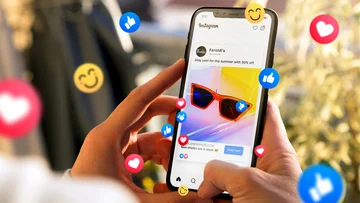
Shoppers discover products passively while consuming content, and in-app purchasing invites impulse buys, eliminating search friction altogether. Influencer content and buyer reviews put social proof at shoppers' fingertips, easing the decision-making process.
That means conversion is happening much earlier and in more places than legacy models support. Buyers can move from discovery to purchase in minutes, during a single session of scrolling Instagram, watching Netflix or browsing YouTube.
The cost of over-indexing on low-funnel
Search and affiliate marketing still play a role, but they're increasingly expensive because everyone is competing for the same high-intent users.
This limits growth as brands pay a premium to capture existing demand while failing to generate new. You're left scratching to capture a shrinking portion of the pie, while your competition siphons customers off the top.
Discovery channels change the equation, allowing brands to influence buyers before they search, creating intent in the same way shelf displays, linear TV, and print ads have for years. Except now, brands can target more effectively and offer "buy now" options at every point along the way.
Why pre-search discovery is so powerful
Channels like social, streaming, online video, and digital out-of-home shorten the journey from awareness to conversion through four powerful mechanisms:
- Algorithmic targeting: Platforms surface products to highly relevant audiences based on behavior and first-party data.
- Performance incentives: Platforms optimize targeting and delivery because your success drives their revenue.
- Built-in trust. Visual, contextual, and social content allows buyers to see products in use, read reviews, and validate their decisions instantly.
- Frictionless action. In-app purchase options like TikTok Shop and Meta Shop, QR codes and direct site links allow immediate conversion.
In other words, these channels cover the top and bottom of the funnel—and everywhere in between.
Perhaps even more important, they play an outsized role in AI-driven search. Most AI engines pull results from social content like videos, reviews, and community discussions, making these sources even more influential. If you're not there, you're missing out on both the in-platform and the AI opportunity.
Real-world performance proof
Brands that diversify to include pre-search discovery are seeing measurable results.
For Visit Phoenix, CTV, and online video were already driving results by enticing potential visitors with a glimpse of the city. So, they leaned in, investing a bit more in pre-search channels, driving 1.1M visits with an estimated $1 billion in incremental visitor spend.
A regional appliance retailer had historically relied more heavily on paid search, resulting in a high percentage of essential replacement purchases. Willing to experiment, they shifted their 2026 mix to include display, online video, and Meta, driving strong ROAS growth in Q1 including both online and in-store purchase attribution.
In both cases, adding discovery investment did more than just improve ad spend efficiency. It unlocked new demand by placing their offer earlier in the funnel.
A practical pre-search playbook
Pre-search discovery shouldn't replace paid search; it should be complementary. Here are some best practices for getting started:
- Rebalance your media mix. Allocate a portion of spend to social, CTV, and online video, and plan to test-and-learn. There is no universal formula for the right split.
- Build for conversion at every touchpoint. You never know when buyers will be ready to buy, so awareness-only creative isn't enough. Every impression must address decision drivers like price, differentiation, trust, and availability.
- Prioritize short-form video. Consumers rely on video for purchase decisions, so invest in YouTube, Instagram, and TikTok content. Stretch your investment further by repurposing content across channels to maximize reach.
- Strengthen your organic presence. Unfortunately, look-alike ads from scam sellers easily proliferate social media channels. Consumers will want to validate your brand by checking your credentials, so be sure your website, social profiles, and reviews are robust and easily accessible. Encourage user-generated content and maintain an active presence on credible, organic channels.
- Optimize for AI visibility. Create AI-engine-friendly content, such as video, expert commentary on your blog, and community discussions. Cultivate a presence on YouTube and Reddit, which increasingly influence AI results.
- Rethink measurement. Discovery is measurable, but not always through last-click attribution. Use multi-touch attribution where possible and include offline signals like store visits and foot traffic to evaluate performance holistically.
With consumers spending more time streaming, scrolling, and engaging with content, the "digital shelf" is no longer confined to a search engine. Conversion can happen at any time in the funnel and brands need to be there to capture it.
Embracing discovery as part of an integrated strategy improves ROAS and ad efficiency, while creating demand that didn't exist before. This full-funnel approach allows brands to capture new audiences rather than compete for an increasingly shrinking share.
About Elizabeth Brooks

Liz has 16 years combined experience in client and agency-side advertising and communications, developing research-based strategy and integrated marketing plans. Destination marketing organization and hotel experience give her keen insight into the client perspective, invaluable in her role as Director of Client Services. Her full-service agency experience spans travel and hospitality, museums and attractions, automotive, and healthcare.
Related Media
Subscribe
Get the latest news and resources from Retail Customer Experience.