Marketing
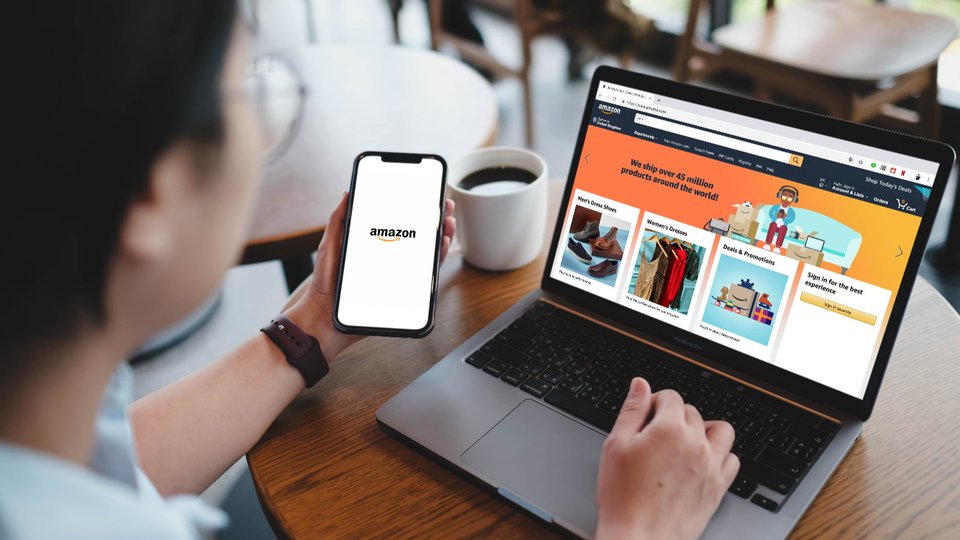
For loyal Amazon customers it’s no longer love but intentional reflex
Retail loyalty is changing from consumer love to reflex as it’s no longer an emotional decision, it’s an automatic one.
March 5, 2026 by Judy Mottl — Editor, RetailCustomerExperience.com & DigitalSignageToday.com
 ChatGPT
 Grok
Grok Perplexity
 Claude
When it comes to loyalty in retail, there's a familiar refrain that it's all about attaining consumer love.
But that refrain may be headed to the back shelf as new research regarding loyalty is no longer about love but about reflex.
That's especially when it comes to Amazon customers.
GWI, a consumer insights company which recently announced integration with Anthropic's AI assistant, Claude, reports that U.S. consumer data reveals Amazon has embedded itself in Americans' daily routines and its dominance is shifting shopping from an intentional decision to an ambient behavior.
Here are a few quick Amazon customer data points from GWI:
- 52% of Americans say Amazon is their favorite retailer — more than four times the next closest competitor (12%).
- Among Amazon shoppers, 59% say a quick, easy checkout is important, while 33% prioritize next-day delivery and 25% same-day delivery.
- 72% of Amazon shoppers call it their "favorite" retailer, raising questions about whether "favorite" now means "most frictionless."
To gain insight on who the loyal Amazon customer is, and why they view Amazon as their favorite retailer, RetailCustomerExperience.com reached out to Chris Beer, a GWI senior data analyst, in an email interview. Beer serves as a data analyst, writer and insight leader.
Q. The GWI research data states retail loyalty is now about reflex. What does that mean exactly?
Beer: When we say loyalty is about reflex, we mean it's no longer an emotional decision, it's an automatic one. Our data shows 52% of Americans call Amazon their favorite retailer, and among its shoppers, 59% prioritize quick, easy checkout while a third prioritize next-day delivery. That tells us "favorite" increasingly means "frictionless." When a platform removes enough effort from the process, shopping stops being a choice and starts becoming a habit.
Q. Amazon's been around since launching as a bookstore in 1995 and then other products in the early 2000s and now 26 years later it's embedded in the American consumer routine. Can you define if that's a long time to happen or a short time and what one to two factors that drove it?
Beer: In retail terms, it's incredibly fast. Other major retailers have had decades to build a footprint; Amazon has compressed that journey into roughly one generation. The accelerant was infrastructure: mass internet adoption, smartphones, stored payments and one-click checkout all rewired consumer expectations. Amazon optimized around those waves, making convenience portable and constant. And they've consistently delivered on what consumers prize the most, particularly price and convenience.
Q. Given what Amazon shoppers say is important, delivery seems to be a huge factor. Any insight on why that's become so important?
Beer: Speed has become shorthand for reliability and control, especially as more Americans turned to online shopping during the pandemic. Among Amazon shoppers, a third say next-day delivery is important and a quarter prioritize same-day and Gen Z are 28% more likely than average to expect same-day delivery. When 27% of Americans shop online weekly and 5% do so daily, delivery is clearly part of the product. The faster it arrives, the more it reinforces the habit loop and even fuels impulse behavior. Daily online shoppers are 58% more likely to say they make impulse purchases.
Q. As of February 2026, Amazon officially surpassed Walmart as the world's largest company by annual revenue but not as a retailer in terms of consumer loyalty as Walmart remains a dominant force in physical goods and groceries. What will it take for Amazon to top Walmart in that regard?
Beer: Revenue scale and retail loyalty aren't the same thing. Walmart still dominates in physical goods and groceries — categories rooted in proximity, price trust and routine. For Amazon to excel in loyalty at that level, it needs to win in everyday essentials in a way that feels as embedded locally as it does digitally. That likely means continuing to close the gap in grocery and last-mile infrastructure, as well as building emotional familiarity in physical communities, not just functional efficiency online.
About Judy Mottl

Related Media
Subscribe
Get the latest news and resources from Retail Customer Experience.
Recent Posts