Commentary
How emerging technologies are changing the retail shopping experience
Bob Meixner, senior product strategist, Oracle Commerce Cloud, offers insight on the emerging technologies hitting the retail environment and why retailers need to pay close attention to deployment and management.
October 5, 2018
 ChatGPT
 Grok
Grok Perplexity
 Claude
By Bob Meixner, senior product strategist, Oracle Commerce Cloud
We're in a particularly exciting time when it comes to retail customer experiences, as emerging technologies such as artificial intelligence (AI), chatbots, virtual reality (VR) and augmented reality (AR) present new possibilities for engaging with customers both in stores and online.
With mobile shopping now considered an industry standard, these emerging technologies give retailers the ability to go above and beyond to create the personalized, connected experiences customers expect today.
Luckily, the value provided by emerging technologies isn't lost on today's customers. According to a recent survey from Tech Pro Research, 88 percent of respondents using in-store technology (including mobile, AR/VR and automated payments) said it's made shopping easier, while 67 percent said these technologies made shopping more enjoyable.
Ultimately, new retail technologies are finally providing customers with what they have been longing for – relevant products, informed and fast customer service, and the ability to experience products before they arrive on their doorsteps.
Don't wait to innovate
Over the years, the role of retailers has remained largely the same — businesses continue to speak to a customer's needs in the moment with immersive, irresistible and convenient experiences online and in store. But with the introduction of new digital channels like mobile that merge the gap between physical stores and e-commerce, the retail journey has fundamentally changed. Now, the role of retailers has evolved in terms of how retailers reach, engage and maintain their customers.
This is largely because retail is no longer just centered around products — it's increasingly focused on the customer. The gold industry standard for modern retailers revolves around experiential retail efforts that make the customer feel as though they are starring in their own movie, with scenes curated just for them. This new emphasis on experiences over products also requires retailers to operate with a never before seen level of agility to unify their customer experience and merchandising efforts.
At the same time, using technologies like AI, chatbots and AR/VR can dramatically increase retailers' abilities to create, optimize, and scale the immersive, customer-centric modern retail experience. Here's how:
Using AI to boost retail efficiency
As more and more customers turn to online shopping and mobile apps to make their purchases, retailers can take advantage of AI-personalized browsing and searching experiences that tailor the product choices presented to you based on your activity and other shoppers like you. AI enhances the ability for a retailer to show their best, most relevant products to a shopper from the first moment of interaction — making it more about the experience than just the product.
Modern retailers are also taking AI one step further — for example, the longstanding online marketplace eBay recently introduced a new feature called Image Search to its mobile app, enabling customers to use pictures instead of words to search eBay's 1.1 billion-plus listings. Image Search leverages two core parts of AI — computer vision and deep learning — in order to provide customers with a useful, quick and innovative way to search for the item they want.
Supporting better customer service with chatbots
Similar to the use of AI in retail, chatbots and virtual assistants can be used via digital channels to help users find a specific item or to answer common order or product-related questions quickly, thus reducing expensive, and often frustrating calls to an agent. Whether it's being used to curate product choices for a customer or in a more service-oriented capacity, chatbot technology puts customers on the fast track to making a purchase while at the same time providing retailers with savings in their service department.
Chatbots can be embedded within popular messaging apps, like Facebook Messenger, or directly within a retailer's website for easier access by shoppers. Nowadays, retailers are also using chatbots to fulfill a variety of new and interesting use cases, from providing a straightforward channel for answering FAQs or even as a personal gift concierge. For example, in the place of a store representative, an online chatbot can help indecisive customers (or those who just want a second opinion) find the perfect gift through a series of simple questions for an interactive and much less frustrating retail experience.
Bringing experiences to customers with AR/VR
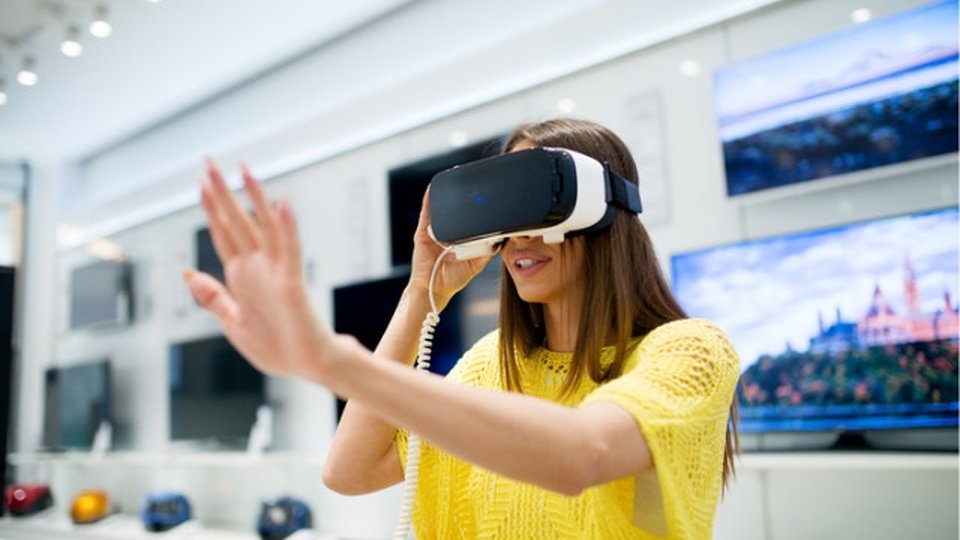
What if you could bring seamless visualization experiences similar to Instagram and Snapchat filters to your customer's experience? Many retailers are beginning to apply AR/VR to a customer's online or in-store shopping experience in order to elevate experiential retail efforts to the next level.
For example, a new mobile app from home furnishing retailer IKEA brings products virtually into your home, allowing customers to gauge how much space they need to plan around or determine the best color scheme for their home. The IKEA Place app is a new way to experience furniture shopping that also serves as a very convenient tool for users to make better, more informed purchasing decisions, resulting in less store returns and turnover for retailers — it's a win-win situation for all parties involved.
Start your modern retail journey today
For retailers, the stakes of providing better retail customer experiences are high. Investments in customer-focused technologies will be judged by consumers over the next five years on a pass or fail basis. The retailers that continue to invest in the right technologies will pass and thrive. Those who don't act or make the wrong investments that increase their technical debt will fail, potentially following in the footsteps of now defunct brick-and-mortar retailers.
To stay ahead of the curve and avoid costly technical debt, pay close attention to how you deploy and maintain these new technologies — long implementations with custom coding should be left on the cutting room floor. Instead, invest in technology that allows you to differentiate without taking you off an upgrade path. Upgrades should be seamless, frequent, non-disruptive and inexpensive.
Finally, beware of the vendor explosion associated with disparate technologies, which can ultimately increase integration and maintenance complexity. Make sure you choose a vendor with a unified strategy to reduce your complexity, so you can focus on leveraging your investments to their fullest in order to provide the ultimate retail customer experience.
More From CommentaryMore
Related Media
Subscribe
Get the latest news and resources from Retail Customer Experience.