Customer Service
The new chapter of bookstores: From retail to experience
Retail as we know it is shifting. Across industries, stores are no longer just points of sale, they’re experiences.
May 28, 2026 by Clare Jones — Outreach Manager, CUSTOM NEON PTY LTD
 ChatGPT
 Grok
Grok Perplexity
 Claude
Gone are the days of dusty corners and silent aisles.
Well, they still exist, but the bookstores that still feel that way, are the ones struggling to stay relevant and profitable.
Today, bookstores are competing with scrolling feeds, short-form video, and café culture. But instead of trying to outpace digital, many are leaning into something entirely different: creating spaces people actually go out of their way for, and want to spend time in.
What's changed isn't just how books are sold. It's how they're experienced.
From selling books to staging experiences
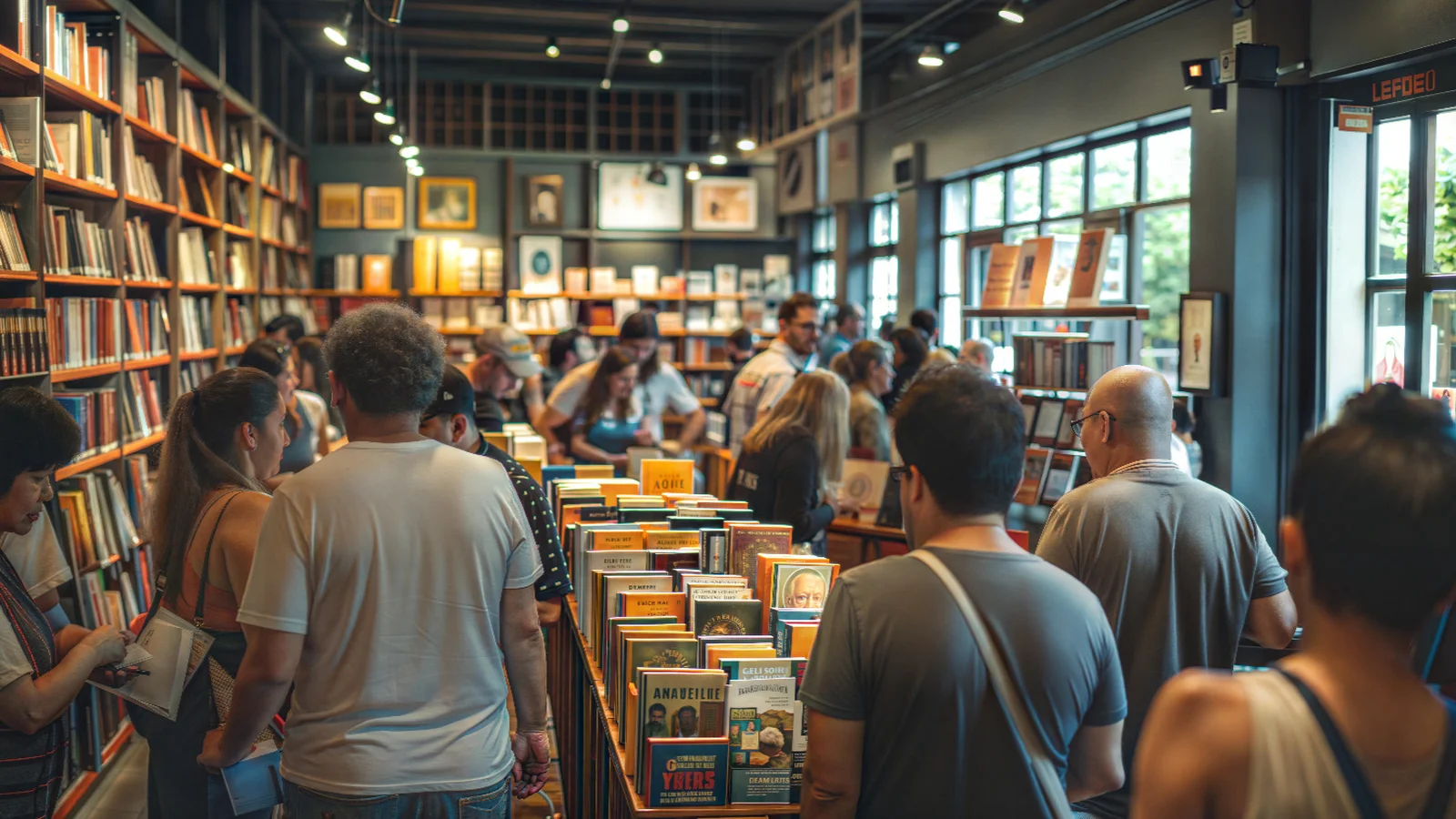
Walk into a great bookstore now and you'll notice it straight away, it doesn't feel like a retail transaction.
Yes, there are still signs that guide to genres, but it is so much more experiential. Striking visual cues, illuminated literary quotes, soft furnishings, and intriguing nooks.
The design is intentional, to evoke wonder, nostalgia, curiosity or calm.
This shift hasn't happened overnight. The rise of online retail, led early on by Amazon, forced physical bookstores to rethink their offerings. If you can purchase a book, cheaper, have it delivered within 24 hours all without having to leave your house, why would you ever shop in-store again?!
Store owners had to come up with something pretty compelling so the experience could become a key differentiator.
The bookstores that survived, didn't try to compete on efficiency. They competed on feeling.
A small but powerful example is Morioka Shoten, a bookstore that sells just one book at a time. One title, one week. The entire space is curated around that single story, often with the author involved.
It's an extreme model, but it proves a point: people aren't just buying books, they're buying into an experience around them.
Bookstores are becoming destinations
Retail as we know it is shifting. Across industries, stores are no longer just points of sale, they're experiences.
Sports retailers are building climbing walls and basketball courts. Beauty stores are offering treatments and tutorials. Everywhere you look, brands are asking the same question: why should someone come in, rather than just buy online?
Stories are immersive by nature, so the opportunity to bring that immersion into the physical space is vast and can be tweaked to suit any audience or new release.
Designing for how people want to feel
At its core, the bookstore experience is emotional.
Anyone who loves browsing books knows the feeling, it's hard to describe, but instantly recognisable. Warm, quiet, slightly nostalgic even in some cases romantic. The kind of atmosphere the Danish would probably describe as hygge.
For years, many larger bookstores lost that. Rows of uniformed shelving, harsh lighting, and a purely functional layout, made the space feel more monotone than magic.
What's interesting now is how deliberately that feeling is being designed back in.
From what I've seen working around retail environments, small changes make a big difference:
- Softer, layered lighting instead of overhead glare.
- Layouts that encourage wandering rather than efficiency.
- Tables that highlight themes instead of cramming for volume.
It's less about "what do we stock?" and more about "how does this space make someone feel when they walk in?"
Because that feeling is what keeps them there.
Why dwell time matters more than ever
One of the clearest shifts in retail thinking is the focus on dwell time.
The longer a person spends in a space, the more likely they are to connect with it and ultimately make a purchase.
That's why more stores are:
- Integrating comfortable seating into the shop floor.
- Adding coffee, tea, or hybrid café spaces.
- Creating corners where it's completely acceptable to sit and read.
It changes the dynamic entirely. You're no longer asking someone to buy a book. You're inviting them to spend time with books.
And when people slow down, their behavior shifts. They browse differently. They discover things they didn't come in for.
Merchandising that feels like discovery
There's also been a quiet shift in how books are presented.
The old model was about volume, more titles, more visibility, more choice.
Now, the more effective approach is curation.
Some of the best stores I've walked through don't feel packed, they feel edited. A single table might focus on a theme, a mood, or even a staff perspective.
A beautiful example was an antique book store that focused on inscriptions rather than the book itself. A love note from 1891 made a poetry book impossible for me not to buy!
These strategies give customers a way in. An opportunity to connect.
That's something James Daunt leaned into when reshaping bookstores under his leadership. His approach was deliberately less uniform, giving stores personality rather than enforcing rigid layouts.
Because with books, sameness doesn't sell. Discovery does.
The bookstore as a community space
Beyond layout and merchandising, the biggest shift is how bookstores are being used.
They're becoming places people return to, not just pass through.
You see it in:
- Regular book clubs and reading groups.
- Author talks and small-scale events.
- Spaces where people can meet without needing a reason to buy.
This matters more than it might seem. Physical retail is increasingly competing with convenience, and convenience usually wins.
Community is one of the few things that can't be replicated online.
For some customers, particularly retirees or those living alone, these spaces offer routine and connection. For others, especially younger audiences, they offer something different: a break from constant digital noise.
Either way, it gives people a reason to come back. (And gets traffic through the doors during quieter times)
Creating the next generation of readers
There's also a longer-term play here, and it starts with children.
It's easy to overlook how many kids today don't grow up being regularly read to. Screens have filled that gap, but they haven't replaced the experience of storytelling.
Bookstores have an opportunity to step in.
Simple ideas, storytelling corners, weekend reading sessions, interactive spaces, can have a lasting impact. Not just on sales, but on habits.
Because when a child associates books with comfort and imagination, that connection tends to stick.
And from a retail perspective, that's not just meaningful, it's sustainable.
What this means for bookstores now
The bookstores that are thriving aren't necessarily the biggest.
They're the ones that understand their role has changed.
They're not just selling books. They're creating an experience around them.
None of this requires a complete reinvention. But it does require intention.
More than a store
For all the disruption bookstores have faced over the past two decades, one thing has held up remarkably well:
People still love the experience of being in a bookstore.
Not just buying a book, but finding one. Sitting with it. Getting lost in it.
In a retail landscape that's increasingly fast paced and transactional, people crave experience and human connection,for bookstores willing to lean into it, that's not a weakness.
It's their biggest advantage.
About Clare Jones
Clare Jones is a global marketing and PR professional specialising in experiential retail and brand growth. As Global Outreach Manager at Custom Neon and Marketing Director at Officespace.com.au, she leads digital strategy, PR, and partnerships across international markets. With a focus on how physical spaces drive engagement, Clare is passionate about experience-led retail. Having attended global industry events including Retail Innovation Conference & Expo and the Creative Retail Awards, she believes the most successful brands are those creating immersive, memorable environments.
Related Media
Subscribe
Get the latest news and resources from Retail Customer Experience.