Technology
Cosentino’s Food Stores deploys body cameras to protect frontline workers, customers
Body-worn cameras are decreasing physical confrontations in the grocer's stores. The strategy is part of a people-first approach and helping teams stay effective, safe and responsive.
October 30, 2026 by Judy Mottl — Editor: RetailCustomerExperience.com & DigitalSignageToday.com, Connect Media
 ChatGPT
 Grok
 Perplexity
 Claude
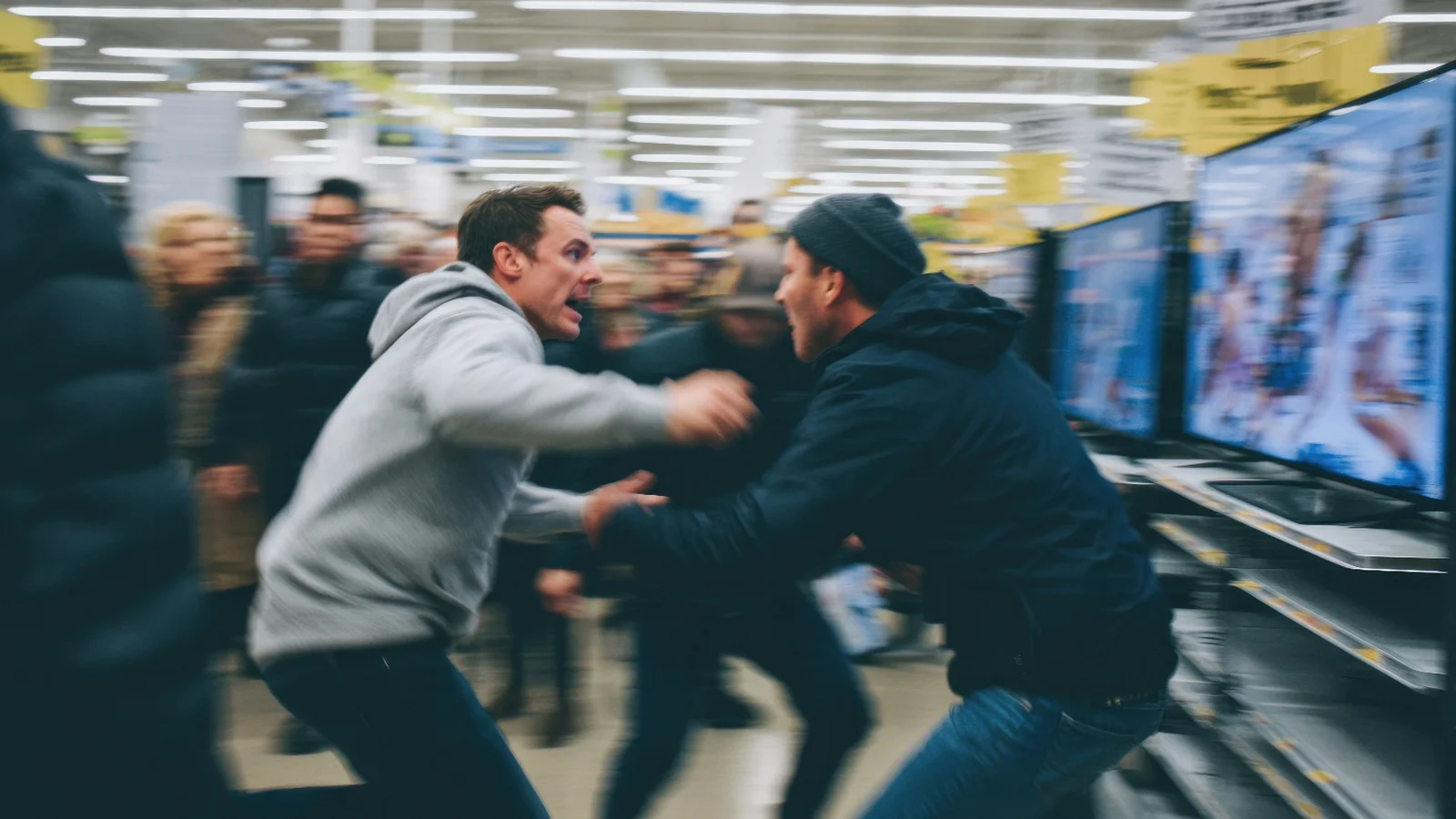
It's not easy working in retail today. Store associates are juggling the demanding role of serving as a brand ambassador along with customer interactions that are getting more fraught with abuse, both verbal and physical.
Three-fourths, 72%, of front line workers experience or see customer incivility on a daily or weekly basis. More than half, 53%, have encountered customers who are verbally abusive, threatening or unruly, and 61% report having dealt with a recent incident. More than a third have been required to stay in a situation with a customer where they felt physically unsafe.
Just 1% have never dealt with customer incivility.
Retailers respond to safety issues
The scenario is driving an increasing number of retailers to tap technology to both protect workers and stem in-store theft incidents.
Security workers at TJ Maxx and Marshalls stores are now wearing body cameras to stem shoplifting and to boost store safety.
Grocery brand Wegmans has deployed facial recognition cameras for store security in a "small fraction" of stores to boost security at locations with elevated risks.
The latest brand is Cosentino's Food Stores, which has deployed body-worn cameras.
The family-owned grocery company, which has served communities for 78 years, has more than 4,000 staffers across 31 grocery locations throughout Kansas and Missouri. Its staff includes five loss prevention specialists. It's operated by six second-generation Cosentino brothers and cousins.
It has deployed body-camera solutions from Axon, a provider of public safety technology, including the Axon Body 4 body-worn camera, Axon Body Workforce, Auto-Transcribe, Axon Evidence and Auror, a retail crime intelligence platform. Axon's solutions also include taser devices, drones, and robotics. Axon Evidence allows the company to store, manage and review digital evidence. Auror is used to manage incidents and reports.
Striving to shore up worker safety, customer safety
The cameras are being worn by frontline loss prevention specialists, the grocer's employees most likely to encounter difficult or unpredictable situations.
Cosentino's selected Axon because the solution combined wearable cameras, audio capture, transcript support, evidence management, and future workflow potential in a single ecosystem.
"A key factor in our decision was the ease of integration with the Auror platform, which we were already utilizing to document incidents, identify trends, and develop cases," said Chris Vandiver, director of loss prevention, in an email interview. "The ability to seamlessly transfer and manage digital evidence between systems streamlined investigative workflows and reduced administrative effort. Additionally, Axon's Evidence.com platform provided a secure, centralized repository for storing, organizing, and sharing video and other digital evidence."
This allows the company to maintain a complete and accurate record of incidents, improve collaboration with law enforcement partners and ensure all relevant information was readily accessible when building cases and supporting prosecutions.
"Ultimately, the combination of Auror integration, robust evidence management capabilities, and improved information sharing made Axon the preferred solution for enhancing our investigative and case management processes," said Vandiver.
Pilot demonstrates benefits
Cosentino's Food Stores initially conducted a six-month pilot at a select group of stores to evaluate the effectiveness of the technology in real-world situations. The trial included members of its loss prevention team which regularly responded to theft, disruptive behavior, and other high-risk incidents.
"One of the most immediate and noticeable outcomes was the impact that recording notifications had on interactions. In many situations, individuals became significantly more cooperative once they were informed that the interaction was being recorded," said Vandiver. "This often helped de-escalate encounters, improved compliance with requests from our team, and allowed incidents to be resolved more professionally and safely."
Throughout the six-month evaluation period, the company monitored usage, employee feedback, incident outcomes and the quality of evidence collected.
"The positive results — including improved cooperation during interactions, enhanced evidence collection, and more complete incident documentation — supported the decision to expand the program beyond the pilot locations," said Vandiver.
The technology has expanded beyond the initial pilot and is now deployed across the company's external loss prevention team.
Managing store interactions
Not only did the grocer want a safer environment for workers its leadership wanted a full, and more balanced record of interactions in the store.
Initially there was skepticism internally about whether body-worn cameras would deliver meaningful operational value, and Vandiver acknowledges he was not initially convinced the technology would make a major difference.
But his view changed during the proof-of-concept process. The pilot revealed cameras could help address several challenges at once: inconsistent reporting, disputed interactions, employee safety concerns and the growing issue of incomplete or one-sided videos appearing online.
"The strategy was prompted by the need to build complete, accurate incident narratives rather than relying on fragmented pieces of information," said Vandiver. "Historically, critical details were often dispersed across video footage, witness statements, receipts, reports, and other evidence sources, making it difficult to fully understand and communicate the entire sequence of events."
Surprises, lessons learned
Following the trial, the most surprising outcome was the immediate behavioral impact the technology had during interactions, according to Vandiver.
"While we were optimistic that the body-worn cameras would improve evidence collection and documentation, we did not anticipate the extent to which simply notifying individuals that they were being recorded would influence their behavior," he said.
In many cases, confrontational or non-compliant individuals became cooperative almost immediately, resulting in safer and more productive interactions for both our team and the individuals involved.
"The results exceeded our projected expectations. Going into the trial, our primary objective was to improve evidence quality and strengthen case documentation. While those benefits were realized, the trial also demonstrated significant de-escalation value, improved compliance, and enhanced accountability that we had not fully anticipated," said Vandiver, adding that any uncertainty the effectiveness of the technology was quickly eliminated as the outcomes consistently demonstrated operational benefits beyond original expectations.
One of the biggest lessons learned, according to Vandiver, is that body-worn cameras are most effective when they are viewed as part of a broader strategy rather than simply a piece of technology.
"The camera itself is valuable, but the real impact comes when it is paired with clear policies, proper deployment, and employee training focused on communication and de-escalation techniques," he said.
Vandiver's recommendation to retailers is to conduct a pilot program and evaluate the results firsthand.
"We entered our trial with expectations around evidence collection and documentation, but the outcomes demonstrated benefits far beyond what we anticipated. The immediate improvement in cooperation, professionalism, accountability, and de-escalation quickly validated the investment," he said.
He also recommends investing time upfront in employee training.
"Team members should understand not only how to operate the technology, but also how to effectively communicate that an interaction is being recorded and how to use de-escalation tactics to reduce conflict," he said.
When employees are comfortable with both the technology and the communication skills that support it, body-worn cameras become a highly effective tool for improving safety, strengthening investigations, he added.
"If there is one piece of advice I would offer, it is not to assume the value is limited to evidence collection. Some of the most significant benefits may come from preventing incidents from escalating in the first place."
Going forward
Cosentino's Food Stores is exploring additional operational uses for the technology throughout the company.
"We are evaluating opportunities where body-worn cameras may provide value in other areas of the business, with a focus on improving safety, supporting investigations, enhancing training opportunities, and creating more consistent documentation of significant incidents," said Vandiver.
"The success of the program has shifted the conversation from where the technology is needed to where it can provide the greatest value for our employees, customers, and organization," he said.
Vandiver's still developing long-term return on investment metrics and actively evaluating measurable outcomes such as incident resolution, investigative efficiencies, evidence management and operational impacts.
But some of the most significant benefits have already become apparent.
"For employees, the greatest ROI has been increased confidence and safety during challenging interactions. Team members know that encounters are being documented accurately, which provides an added level of support and accountability," he said.
'"We have also seen body-worn cameras contribute to de-escalation efforts, with individuals often becoming more cooperative once they are informed they are being recorded. This has helped employees manage difficult situations more effectively while reducing the likelihood of conflicts escalating."
Assessing return on investment
The top return on investment, according to Vandiver, is that frontline staff are experiencing safer interactions as the body worn cameras are reducing physical confrontations.
Another clear benefit has been behavioral change. When customers realize they are being recorded, many interactions change quickly. In some cases, people who had been stealing or acting combative responded to the cameras by simply leaving the store without further conflict.
The use of body-worn cameras and technologies has driven a 37% decrease in incidents of violence and verbal abuse in real-world retail deployments, according to Mike Shore, senior vice president and general manager of enterprise at Axon.
"We also see up to 80% of employees reporting they feel safer. Once store leads and loss prevention teams see how quickly they can respond and resolve incidents, they recognize that this is a practical solution for running the store safely and efficiently, benefiting frontline workers and customers alike," Shore said in an email interview.
In terms of deployment challenges retailers typically face the hurdle of change management as some employees may be supportive, others not so supportive.
"There's usually a mix of reactions at the start. Some employees are immediately supportive; others are more cautious. That tends to change quickly once they start using it, confidence goes up because they feel more supported and protected during difficult interactions," said Shore.
He said employee training is essential for success and not just on the technology side.
"Training is critical, not just for the tech, but also how to handle in-store disruptions before the situation escalates," he said.
Keys to success
The use of body-worn cameras isn't a one size fit all as retail environments vary in terms of size, customer traffic, environment.
"How they're deployed will naturally look different depending on the environment," said Shore.
For example, a high-volume discount retailer dealing with organized retail crime is in a very different position than a boutique location with limited foot traffic, and the application should reflect that.
"What's consistent across formats is the underlying value — visibility, accountability, and a safer environment for staff. Increasingly, that value extends beyond video documentation alone," he said. "We believe the combination of body-worn cameras, AI-powered assistance, automated documentation and intelligent alerting has the potential to benefit a broad range of retailers."
Another key to success is alignment across the business — from loss prevention to IT and all need to be involved at the start.
"Equally important is how it's introduced to employees," said Shore. "When positioned as a tool that protects and supports them, adoption is significantly stronger. The common threads in successful rollouts are transparency and clarity."
About Judy Mottl

Judy Mottl is the editor of RetailCustomerExperience.com and DigitalSignageToday.com at Connect Media. She is an award-winning editor, reporter and blogger who has worked for top media for nearly four decades, including AOL, InformationWeek and Internet News, as well as for leading technology providers including HP. She’s written everything from breaking news to in-depth industry trends and reported on technology long before the internet arrived, including the debut of the first smartphone. When she's not sharing insights on digital signage deployments and trends in retail customer experience she's on the beach or watching the latest live murder trial.
Related Media
Subscribe
Get the latest news and resources from Retail Customer Experience.