Omnichannel
Target taps 3D, simulation tech for Houston Receive Center
Meeting consumer demand is the top priority for any retailer and for Target that means faster, more efficient product distribution.
June 2, 2026 by Judy Mottl — Editor: RetailCustomerExperience.com & DigitalSignageToday.com, Connect Media
 ChatGPT
 Grok
Grok Perplexity
 Claude
Meeting consumer demand is a top priority for any retailer and at Target that means faster, more efficient product distribution.
It means getting products and grocery items to the right place faster and at a lower cost, as a ConnectCRE report noted.
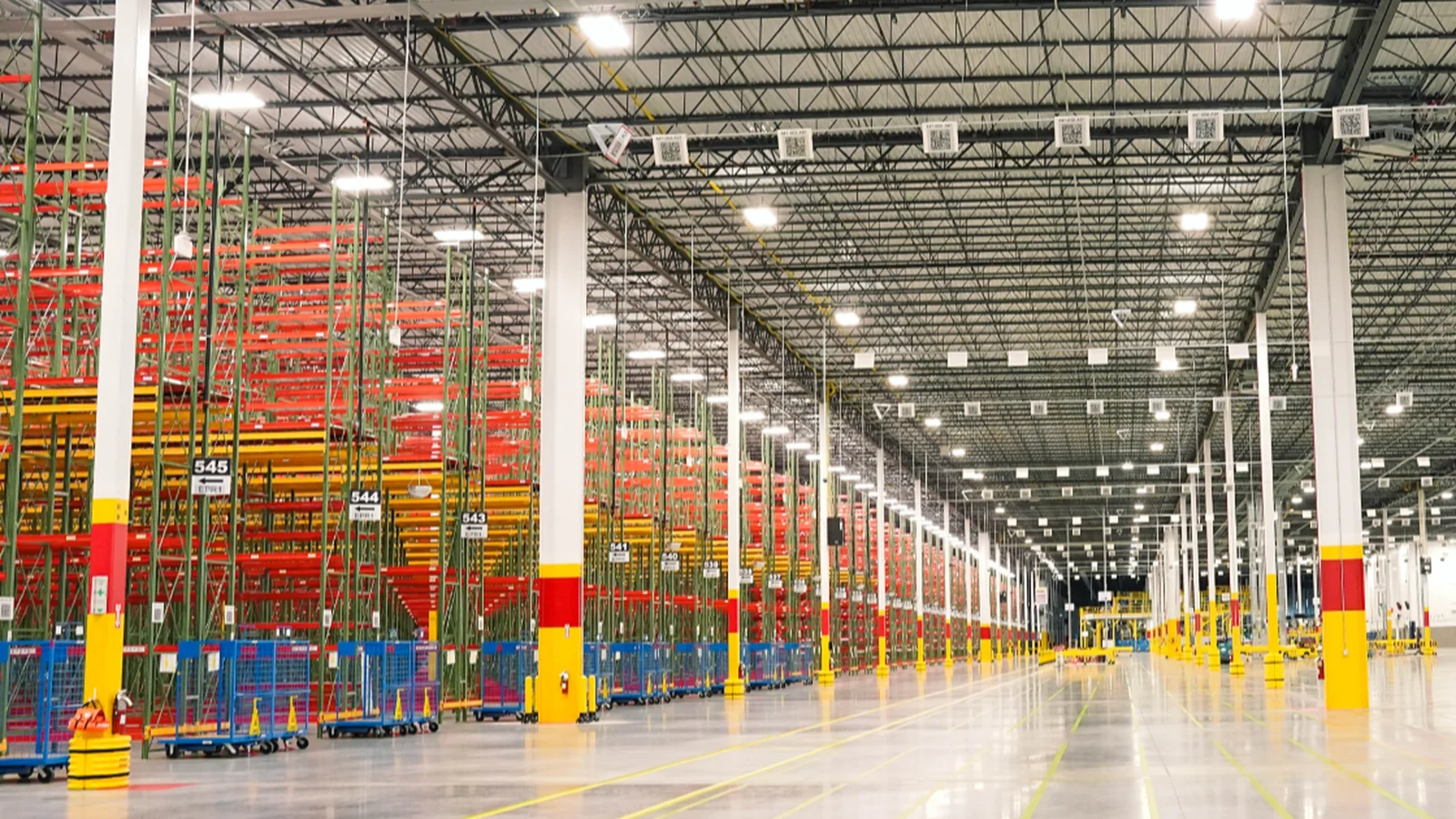
The ConnectCRE report, by Mike Boyd, focused on Target's new Receive Center in Houston, which will service six regional distribution centers and one flow center – replenishing inventory that then heads to stores.
Located between Target's Import Warehouses in Georgia and Washington, the facility intakes products directly from Target's global vendors and holds product until it's needed elsewhere, according to a Target press release.
The Houston Receive Center has a first-of-its-kind sorter for Target featuring two independent line sorters that take up a smaller amount of space. The more optimized sorter design saved nearly $700,000 in construction costs, according to a Target press release.
Target supply chain teams designed the 1.2-million-square-foot facility using 3D visualization and simulation technology at Target's XR Experience Center based in Minneapolis, Minnesota.
The retailer had tapped the technology over the past several years for designing and remodeling properties, but this was the first time it was used end-to-end in the design process to create a 3D digital model of the facility before construction began.
The virtual approach allowed design teams to optimize layouts and operational flow before construction began, resulting in a fully optimized facility ready to serve Target's network from day one.
Target's supply chain strategy
Target's Receive Center, according to one industry expert, is a clear step toward solving upstream capacity and flow by holding inventory earlier in the network so it can be released closer to the moment of need.
But it's only the first step toward the goal of meeting consumer demand, Optimum Retailing CEO and Co-Founder Sam Vise said in an email interview. Optimum Retailing is an in-store optimization platform.
"The next challenge is ensuring that this improved flow actually translates into execution at the shelf. Capacity isn't just about moving product through distribution centers or avoiding backroom congestion," said Vise.
"It's about making sure the right products are available at the right moment for store teams to place them effectively. Without that connection, inventory can still arrive too early, too late, or without clear direction on how it should be merchandised, limiting the impact of even the most efficient supply chain."
Target's Receive Center will likely deliver a huge impact when it comes to trending and seasonal items in the supply chain.
"Target is clearly building the capability to secure and position high-demand products earlier, but the customer experience ultimately depends on how seamlessly those products show up in-store," said Vise.
That's because shoppers stopping by a Target looking for trending items expect to find them quickly, prominently and in the right context.
"That requires connecting inventory availability with how those products are actually placed on the floor, so they're not just in the building but visible and easy to shop," said Vise. "By linking what's trending with where and how it's presented, retailers can turn supply chain agility into a better in-store experience and ensure customers can find what they came for when it matters most."
How the Receive Center was designed
Target's Receive Center facility represents a $265 million investment in the Houston region, creating 185 local jobs, according to the ConnectCRE report.
"By strategically holding inventory where it's needed most, the Receive Center enables Target to respond faster to store and guest demand while reducing distribution costs. This investment adds to Target's significant presence in the greater Houston area, which includes 40 stores and a sortation center," stated a Target press release.
Target's team used immersive 3D visualization and simulation technology from the XR Experience Center to design the entire facility, which is the first time the company has used both visualization and simulation technology end-to-end for site design.
This virtual approach allowed teams to optimize layouts and operational flow before construction began, resulting in a fully optimized facility ready to serve our network from day one.
In the design process at the XR Experience Center, a space where Target's design and operations teams create extended reality — 3D representations of facilities that can be navigated with virtual reality headsets. The center, which opened in 2023, serves as the testing ground for store and supply chain layouts.
Over a series of months, the supply chain design teams created the first virtual end-to-end building design. Target said the advantages of the design approach became obvious — faster troubleshooting, hiring, training and cost savings.
The 3D environments allowed team members to feel and understand a space and better identify where there might be anomalies or discrepancies.
Target has used the technology to design stores and facilities.
The simulated environments are also targeted to run 'what-if' scenarios and test how a facility will operate.
It took several months to build all the 3D assets associated with the Receive Center and then the teams worked with a visualization partner to host the data in headsets.
During the design process, cross-functional teams visited other supply chain facilities to view current processes.
When design is brought into 3D, people can understand it without having an engineering background, according to Target.
About Judy Mottl

Judy Mottl is the editor of RetailCustomerExperience.com and DigitalSignageToday.com at Connect Media. She is an award-winning editor, reporter and blogger who has worked for top media for nearly four decades, including AOL, InformationWeek and Internet News, as well as for leading technology providers including HP. She’s written everything from breaking news to in-depth industry trends and reported on technology long before the internet arrived, including the debut of the first smartphone. When she's not sharing insights on digital signage deployments and trends in retail customer experience she's on the beach or watching the latest live murder trial.
Related Media
Real EstatePresented ByConnectCRE
Subscribe
Get the latest news and resources from Retail Customer Experience.